How Can You Protect Your Vote This Fall?
As a therapist, it’s not generally my business who my clients vote for, unless it’s related to a question they want to address in therapy. But as a person and a professional committed to human rights and social justice, I believe in democracy and access to the political process. And I also pay attention to how what’s going on in the world affects the well-being of the people I work with.
This fall, a lot of people are understandably worried about how the U.S. midterm elections will play out. Recent loss of key provisions of the Voting Rights Act, unprecedented redistricting (which normally only occurs after the census), election disinformation spread by elected officials, efforts to interfere with state voter rolls, and threats to deploy federal agents on Election Day are just a few of the good reasons to be worried.
The good news is that there are people across the country working hard to plan for and counter these threats to a free election. And there are things you can do, now and over the next two months, to protect your vote.
1. The election will happen. Make a plan to vote!
Some people feel so overwhelmed and anxious about the threats to the election that they think there’s a good chance it won’t happen. This is not the case. Even established modern authoritarian states generally have elections–the authoritarianism just takes the form of manipulating the rules so that the opposition has little chance of winning. But, as the recent election in Hungary shows, huge turnouts and organizing can defeat even autocrats who have had many years to rig the system.
In the U.S. right now, states and localities are preparing for the midterm election. Ballots are being printed and voter lists made ready. Experts on democracy will tell you that this election will happen. However, there are threats to every eligible voter being able to vote and have that vote fairly counted. That’s part of why it’s extra important to make a plan to vote, and take into account any barriers that might keep you from voting. Don’t let hopelessness suppress your vote!
2. Learn about voting in your state and note the resources available to help you.
It’s normal to have questions about voting and need reminders of how the process works–whether you’ve voted dozens of times or are voting for the first time! Vote.org and 866ourvote.org are trustworthy websites with tons of state-specific information about voting, voter registration, what’s on your ballot, and more. Both are long-established (founded in 2008 and 2002) non-partisan organizations working to support voting rights and voter education. For those of you who live in Champaign County, Illinois, local voting information is available at https://champaigncountyclerk.com/elections.
Consider putting the number 1-866-OUR-VOTE in your phone, just in case. It’s an information line for questions about voting, but also a legal hotline to report threats, interference, or other issues with voting in case you witness them later on.
Please note that Vote Safe (.org) is a fake voting information website established by Elon Musk’s political action committee that is collecting visitors’ personal information. Avoid it, and advise those you know to do the same.
3. Vote early if you can. Vote in person if you can.
Because there have been some attempts to interfere with mail-in voting, followed by court cases, some advocates have recommended voting in person if you are able to. HOWEVER, if voting by mail is the best way to ensure that you can vote, go ahead and vote by mail. It’s much better than a risk of not voting. Recent efforts to suppress mail-in voting were rejected by the Supreme Court, even more reason to use mail-in voting if that works best for you.
More importantly, vote as early as you can! Many of the possible disruptions that could impact voting are likely to take place on Election Day itself (e.g. moving or closing polling places, frivolous ballot challenges, intimidation or threats of violence at the polls). The more people who vote early, the less impactful such disruptions could be. And, if you choose to use mail-in voting, mailing your ballot early reduces the risk that your ballot will be delayed and miss any deadlines.
If you live in Champaign County, here is a link to early voting information, and here are the locations of drop boxes where you can deposit your vote-by-mail ballot without involving the postal service. If you’ve received a mail ballot and want to vote in person, you’ll need to take the mailed ballot with you and surrender it to the poll worker.
4. If you can, get your ID in order.
This shouldn’t be necessary. Voting should be easy! However, there have been recent efforts at the federal level to pass a law called the SAVE act, which would increase proof of citizenship requirements for voting access and be devastating, particularly for those who have changed their names for any reason, including marriage or gender transition. So far, these efforts have been unsuccessful and it seems less and less likely this will happen before the election. But, if you want extra insurance against late efforts to implement something like the SAVE act, you can take the time to find or apply for a certified copy of your birth certificate or passport.
In any case, it is good preparation to check your state’s ID laws and make sure you have an ID before voting, if needed. In the state of Illinois, you do not need to show ID to vote, unless you are voting for the first time and did not show ID when you registered to vote (and if that applies, several forms of proof of identity without a photo ID are acceptable).
5. There are ways to get involved if you want to!
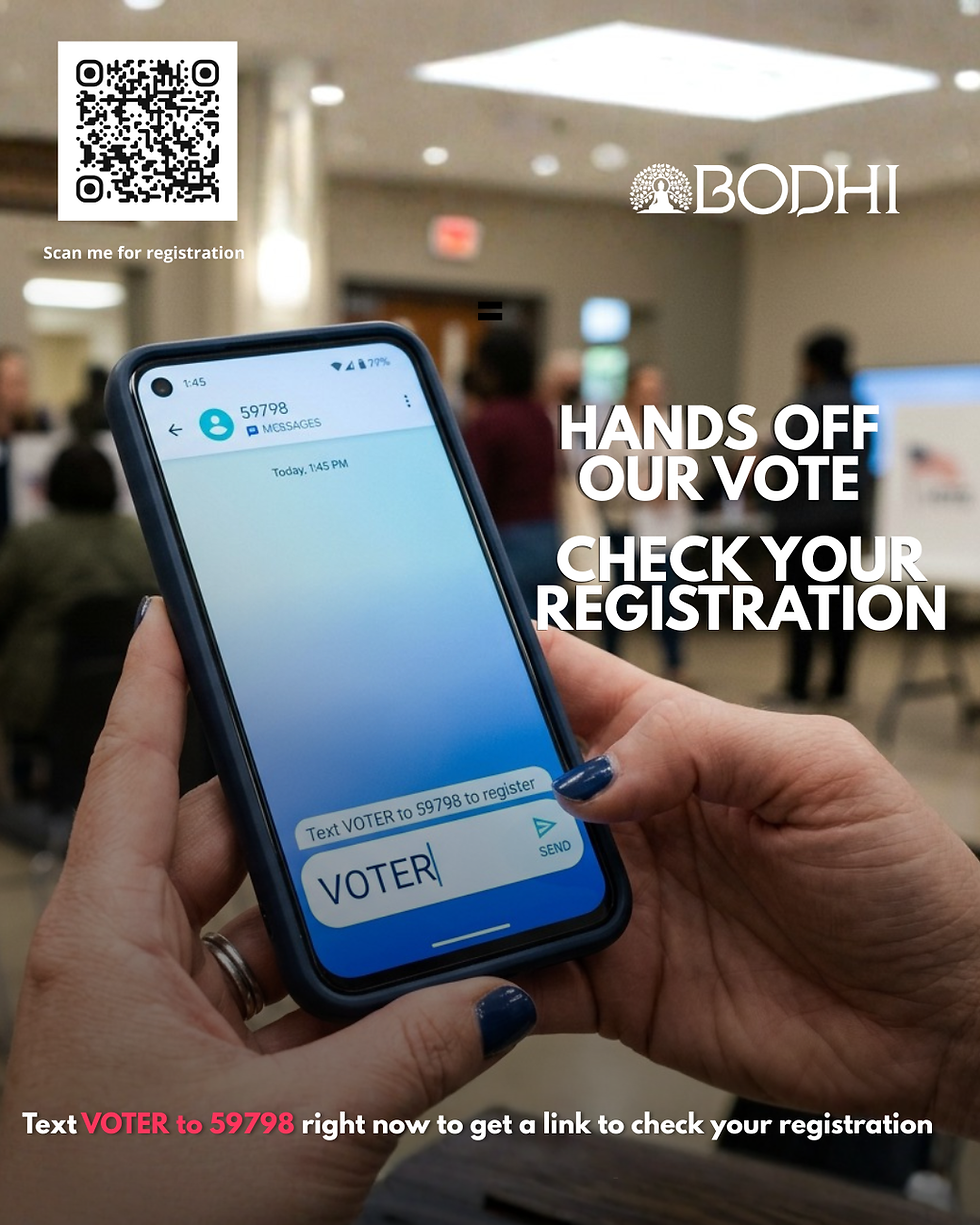
Tons of people are doing incredible work to protect this election. Hopefully just that reminder helps take you out of a state of panic and moving toward preparation. If you’re at a place where you feel ready to volunteer for one of those roles, https://wearegroundcontrol.org/ is a site that compiles election protection volunteer opportunities. If you just want to get plugged in so that you get trusted information about the changing election picture and are ready to be part of the response if needed, consider signing up for updates from Indivisible’s Hands Off Our Vote campaign mailing list. If you have time, you can also increase your readiness for this election and become a trusted resource for friends, family, and coworkers by learning about the election laws in your state.
My big takeaway from the election protection trainings I attended is this–massive voter turnout, especially early voting turnout, IS election protection. The threats to voting rights will be less impactful if turnout is huge, and no matter where you are, making a plan to vote can make you an important part of that.
World events can make difficult times in life even more stressful. Therapy can help. We’re always here if you are interested in scheduling a free consultation.
About the author
Kate is a Licensed Clinical Professional Counselor who believes therapy is a collaborative space where you can better understand your story, find healing, and move forward in a way that feels meaningful to you. She uses approaches including CBT, DBT, mindfulness, acceptance-based strategies, and EMDR to support clients experiencing anxiety, depression, trauma, PTSD, and life transitions.
Kate is also a climate-aware therapist, offering a validating space to explore climate anxiety, grief, and other overwhelming emotions while finding ways to live meaningfully and embrace joy in an imperfect world.


Comments